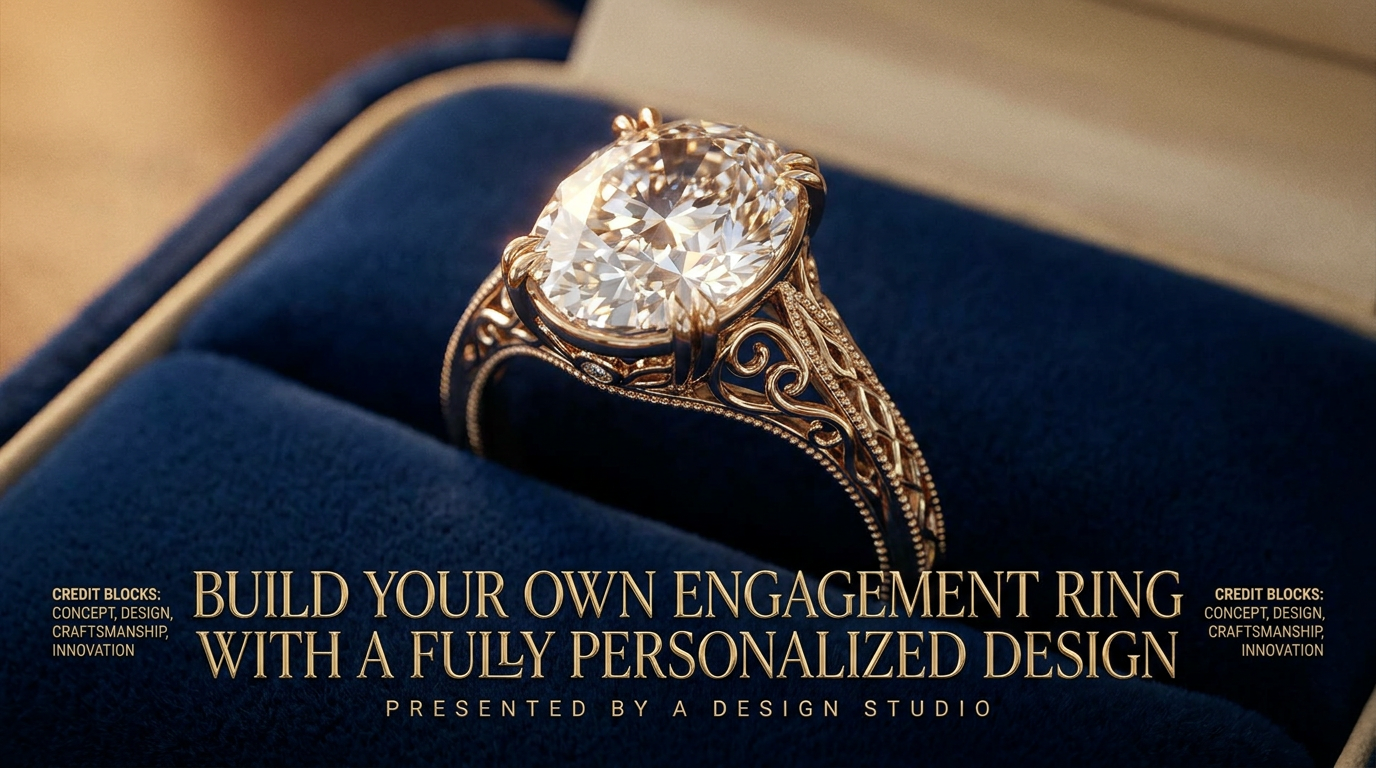
Build Your Own Engagement Ring With A Fully Personalized Design
A build-your-own engagement ring approach gives you more control over the details that make a ring feel personal. Instead of choosing a finished design and accepting every element as it is, you can select the diamond, setting, metal, and smaller details separately. That flexibility is what makes custom engagement rings appealing. The finished ring can look considered without feeling like something picked from a display case.
Choose the Diamond and Setting for a Custom Engagement Ring
The diamond usually becomes the starting point, but the setting matters just as much. A round diamond can create a very different impression in a halo setting compared with a simple solitaire. And then there is the practical side. The setting should hold the stone tight, but still allow you to work on its shape and size.
When you pick these two elements, think about:
- Diamond shape: Round, oval, pear, emerald, and cushion cuts each create a different visual effect.
- Style of the Setting: Solitaire, halo, bezel, three-stone, and pave settings provide different levels of detail.
- Proportion: The center stone and setting should be in proportion to one another and not take away from each other.
This is where custom engagement rings can feel different than standard designs. You're not just choosing the ring. You are putting the main pieces in.
Design Your Own Ring Around Your Personal Style
To design your own ring, start with the style you naturally wear. Someone who doesn’t often wear jewelry may prefer a simple solitaire with fewer details. If you like layered necklaces, vintage jewelry, or more elaborate pieces, a setting with more stones or interesting metalwork might be for you.
Consider:
- Overall shape: Classic, modern, vintage-inspired, or understated.
- Band profile: A thin band feels delicate, or a wider band adds visual weight to the ring.
- Detail level: Accent stones, milgrain, engraving, or textured finishes can add character without changing the basic structure.
There is no need to add every possible detail. In fact, too many can make a design feel busy. Sometimes restraint does more.
Build Your Own Engagement Ring From the Right Metal and Setting
Metal is easy to overlook when the diamond is doing most of the visual work. But look closely at two rings with the same diamond, one in yellow gold and another in platinum, and they can feel surprisingly different.
When you build your own engagement ring, the metal should work with both the diamond and the intended style. White metals give you a modern look, while yellow and rose gold add a warm touch.
Think about these elements:
- Metal Color: Select one that matches the diamond and the other pieces of your jewelry.
- Durability: The band needs to be suitable for the level of daily use it will endure.
- Setting Compatibility: This combination should match both visually and structurally.
Personalize the Details That Define Your Engagement Ring
After selecting the major features of the engagement ring, the secondary factors become important. This is typically when a conventional design takes on an element of personalization.
You may choose to add a subtle engraving to the band, select a specific pattern for the accent diamonds, or adjust the proportions of the setting. Even small changes can affect the overall appearance of the ring. This part of the process is less about following a trend and more about deciding what belongs in the design. A meaningful date, an unusual stone arrangement, or a subtle detail on the band can have more significance than another decorative element simply added for appearance. And honestly, that is part of the appeal of personalization. The details do not have to be obvious to everyone else.
Create a Custom Engagement Ring That Fits Your Budget
The customized design also requires realistic spending. The cost of the center diamond alone will comprise a major part of the overall price, but there are other factors that contribute to the cost. Before choosing individual aspects of the ring, determine the budget first and prioritize your preferences. If the diamond takes the spotlight, the budget will favor its qualities. On the other hand, if the setting is the highlight of the jewelry, the distribution will change.
A practical approach is to decide:
- Which element matters most visually.
- Which features are essential and which are optional.
- Where adjustments can be made without changing the overall design.
This makes the process of creating custom engagement rings more manageable. Personalization does not mean adding everything available. It means choosing the elements that actually belong in your ring.
Conclusion
A build-your-own engagement ring process gives you the freedom to make decisions one element at a time. The diamond, setting, metal, proportions, and personal details can all work together instead of being chosen independently from a finished design.
The result does not have to be complicated. A simple setting with one meaningful detail can be just as personal as a more elaborate ring. What matters is that the finished design reflects the choices behind it, from the first diamond selection to the final detail on the band.
FAQs
Q. What does it mean to build your own engagement ring?
It means selecting individual elements of the ring, such as the diamond, setting, metal, band style, and personalization details, rather than purchasing a completely finished design.
Q. Can I design my own ring with a specific diamond and setting?
Yes. Many custom jewelry processes allow you to select a specific diamond and pair it with a compatible setting, metal, and additional design details.
Q. Are custom engagement rings more expensive?
Not necessarily. The cost depends on the diamond, metal, setting, craftsmanship, and level of personalization. Establishing a budget early can help determine which elements receive the most attention.
